
When we prepare for coastal adventures, our thoughts often turn to sun, sand, and the calming rhythm of the waves. Yet, our clothing choices can have a profound impact on the very oceans we cherish. The global fashion industry contributes significantly to environmental challenges, from the resources used in production to the pollution generated during a garment’s lifecycle. This impact is especially felt in delicate marine ecosystems, where textile waste and microplastic shedding from synthetic fabrics pose serious threats to ocean health and marine life.
Fortunately, a growing movement in sustainable fashion is offering solutions. Eco travel clothing allows us to enjoy our travels responsibly, minimizing our footprint. This includes innovative eco-conscious beach apparel designed to protect marine environments.
In this guide, we will explore how choosing eco-conscious apparel can be a powerful step in supporting ocean conservation. We will delve into key features, materials, and practices that make travel clothing truly sustainable. Our aim is to help you make informed decisions that benefit both your journey and our planet’s precious marine ecosystems.
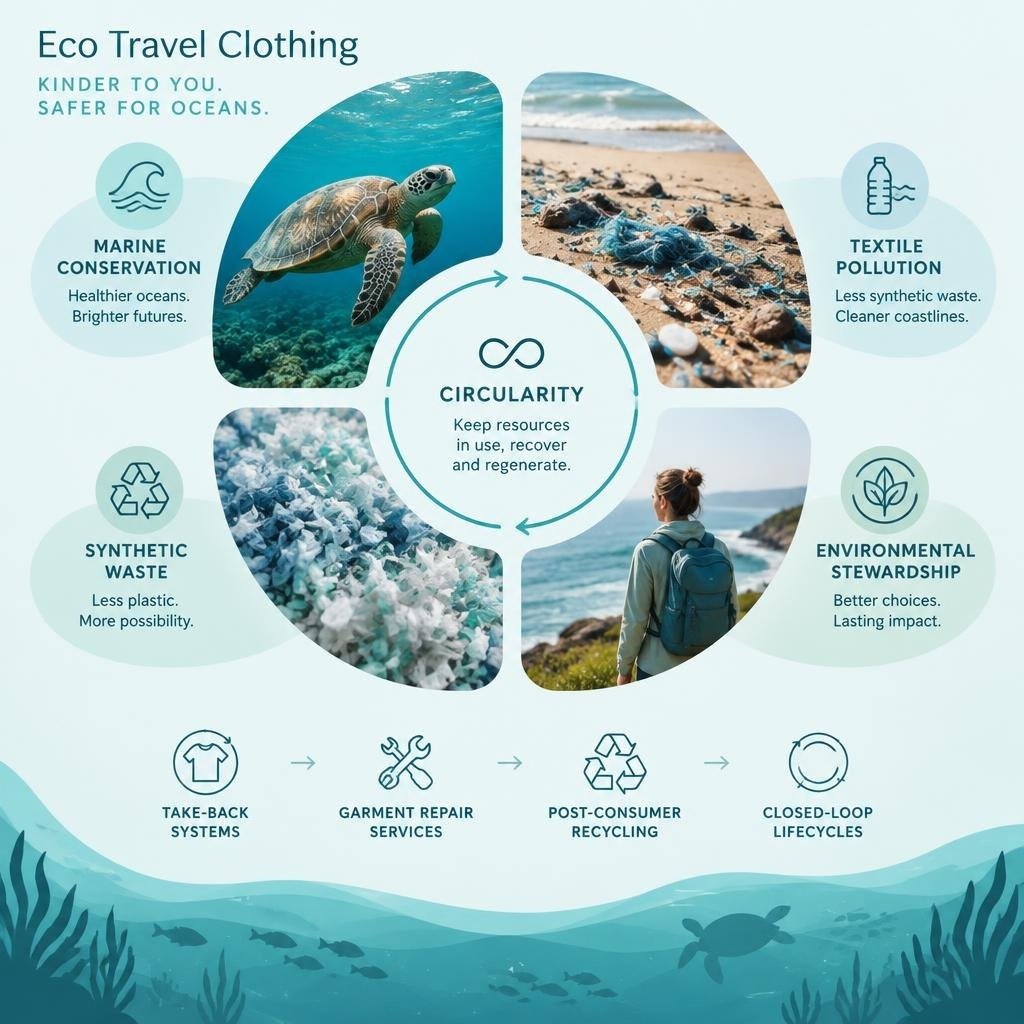
The health of our marine ecosystems is intrinsically linked to how we produce and consume textiles. Conventional fashion practices contribute to ocean degradation through microfiber pollution, chemical runoff, and excessive waste. Eco-conscious coastal apparel emerges as a vital solution, focusing on mitigating these harms through sustainable material choices and circular manufacturing processes. By prioritizing garments made with the ocean in mind, we can significantly reduce the influx of synthetic waste into our waters and promote watershed health from source to sea. This shift represents a powerful form of environmental stewardship, where every clothing choice can contribute to the preservation of our planet’s most vital resource.

Material Innovations in Eco-Conscious Coastal Apparel
The foundation of eco-conscious coastal apparel lies in its materials. Innovators are turning to fibers that offer both performance and a reduced environmental footprint.
- TENCEL™ Lyocell: Derived from sustainably sourced wood pulp, TENCEL™ Lyocell is known for its softness, breathability, and excellent moisture-wicking properties. Its closed-loop production process minimizes water and chemical use, making it a highly sustainable option. TENCEL™ fibers are also biodegradable, ensuring they return to nature at the end of their life.
- Responsible Wool Standard (RWS) Merino: Merino wool, particularly that certified by the Responsible Wool Standard (RWS), offers exceptional temperature regulation, odor resistance, and natural UPF protection. RWS certification ensures ethical treatment of animals and sustainable land management practices. Unlike synthetics, merino wool is a renewable resource and biodegrades within approximately six months, preventing long-term pollution.
- Recycled Synthetics: Materials like recycled polyester, often made from post-consumer plastic bottles or ocean waste, divert plastic from landfills and oceans. While still synthetic, their use reduces the demand for virgin petroleum-based plastics and lowers energy consumption. Brands are increasingly blending recycled polyester with other fibers to enhance durability and performance while maintaining a sustainable profile.
- Organic Cotton: For casual wear, organic cotton grown without harmful pesticides or synthetic fertilizers minimizes chemical runoff into waterways. While cotton can be water-intensive, organic farming practices often improve soil health and water retention.
These materials are selected not only for their performance in coastal environments but also for their biodegradability and minimal marine impact.
Material Type Performance for Coastal Wear Marine Impact TENCEL™ Lyocell Soft, breathable, moisture-wicking, quick-drying Biodegradable, minimal microplastic shedding, closed-loop production RWS Merino Wool Temperature regulating, odor-resistant, UPF 50, quick-drying Biodegradable, renewable, minimal microplastic shedding Recycled Polyester Durable, quick-drying, water-resistant (when treated) Reduces plastic waste, but can still shed microplastics Organic Cotton Breathable, soft, comfortable for casual wear Biodegradable, less chemical runoff than conventional cotton Eliminating Toxic Treatments and Microplastics
Beyond material choice, the way fabrics are treated and manufactured is crucial. Traditional clothing often relies on harmful chemicals for water repellency, stain resistance, or dyes.
- PFC-free DWR: Per- and poly-fluoroalkyl substances (PFCs) are commonly used in durable water repellent (DWR) finishes but are persistent environmental pollutants. Eco-conscious brands are adopting PFC-free DWR treatments, which are safer for both the environment and human health, preventing these chemicals from leaching into ocean runoff.
- Chemical-free UPF: Many eco-friendly fabrics, like merino wool and TENCEL™, naturally offer UPF 50 sun protection without the need for chemical additives. This avoids introducing potentially harmful substances into marine environments.
- Non-toxic Dyes: The textile industry is a major polluter of water bodies due to synthetic dyes. Sustainable apparel uses low-impact, non-toxic dyes and innovative dyeing methods that significantly reduce water consumption and chemical discharge, preventing contamination of coastal waters.
- Microfiber Shedding Mitigation: A significant challenge with synthetic fabrics is microfiber shedding during washing, contributing to ocean microplastic pollution. While recycled synthetics are beneficial, they still shed. Innovations include tighter weave constructions, specific washing instructions, and the development of filters to capture microfibers before they enter wastewater.
Balancing Performance, Durability, and Marine Preservation
Travel clothing for coastal regions demands a delicate balance: it must perform well in challenging environments, endure the rigors of travel, and do so without harming the marine life it aims to protect. This means selecting garments that are not only sustainable in their origin but also in their functionality and lifespan.

When choosing eco travel clothing, consider properties like salt resistance, which prevents degradation from sea spray, and high UV protection to shield you from intense sun. Quick-dry properties are essential for comfort and reducing luggage weight, while thermal regulation ensures versatility across varying coastal temperatures, from cool mornings to warm afternoons.
Modular and Multi-Functional Garment Design
A key aspect of sustainable travel is reducing what we carry, minimizing our carbon footprint associated with transport. Modular and multi-functional garment design plays a crucial role here.
- Packable Design: Clothing that packs down small and is lightweight reduces luggage bulk and fuel consumption during travel.
- Multi-Season Layering: Pieces designed to be layered, such as merino wool base layers or versatile outer shells, can adapt to diverse climates and weather conditions, reducing the need for multiple specialized garments.
- Versatile Styling: Garments that can transition seamlessly from active outdoor pursuits to casual evening wear maximize utility and minimize wardrobe requirements. For example, a convertible hiking pant might feature zip-off legs to become shorts, or a stylish jumpsuit could serve both as travel wear and an evening outfit. This approach inherently leads to waste reduction by extending the utility of each item.
Designing Eco-Conscious Coastal Apparel for Longevity
Durability is a cornerstone of sustainability. A garment that lasts longer reduces the frequency of replacement purchases, conserving resources and minimizing waste.
- Reinforced Stitching: High-quality construction with reinforced seams and stress points ensures garments withstand repeated wear and washing, particularly important for active travel.
- Zero-Waste Tailoring: Some brands employ zero-waste pattern cutting, where every piece of fabric is utilized, minimizing textile waste during production.
- On-Demand Manufacturing: Producing items only when ordered reduces overproduction and inventory waste, a significant issue in fast fashion. This also often allows for greater attention to quality and craftsmanship.
- Structural Durability: Choosing fabrics with inherent strength and resistance to abrasion, such as tightly woven recycled polyesters or robust merino blends, ensures the garment maintains its integrity over time. Brands using materials like JIAREN 100% recycled polyester dobby fabric in their technical pants exemplify this commitment to lasting quality.
Extending Garment Lifecycles Through Care and Local Maintenance Practices
Even the most sustainably produced clothing requires mindful care to maximize its lifespan and minimize its environmental impact. Proper maintenance not only preserves the garment but also prevents harmful microfibers and chemicals from entering our oceans.
Traditional Maintenance and Eco-Friendly Laundering
Drawing inspiration from traditional practices, eco-friendly laundering focuses on gentle, effective methods.
- Microfiber Filters: For synthetic garments, using a microfiber filter on your washing machine or a wash bag like a Guppyfriend can significantly reduce the release of microplastics into wastewater.
- Cold Washing: Washing clothes in cold water saves energy and is gentler on fabrics, preserving their color and integrity.
- Technical Washes: For performance fabrics with DWR finishes, using specialized technical cleaners like Nikwax Tech Wash® instead of conventional detergents helps maintain water repellency without stripping beneficial treatments.
- Line Drying: Air drying clothes conserves a significant amount of energy compared to tumble drying and is much gentler on fabrics, extending their life.
- Natural Soaps and Plant Detergents: Opting for biodegradable, plant-based detergents free from harsh chemicals, phosphates, and artificial fragrances prevents water pollution. Traditional methods, like using lye soap, offer simple, effective cleaning that aligns with eco-conscious principles.
- Fabric Preservation: Avoiding fabric softeners and excessive washing helps preserve the natural properties of fibers like merino wool and the integrity of DWR coatings.
- Modular Patching: Learning basic repair skills, such as patching small tears or re-stitching seams, can significantly extend a garment’s life. This echoes traditional practices of repairing rather than replacing.
Sustainable Laundering Practices for Coastal Clothing:
- Use cold water for all washes.
- Employ microfiber catching bags for synthetic items.
- Choose eco-friendly, biodegradable detergents.
- Air dry garments whenever possible.
- Wash only when necessary, spot cleaning minor spills.
- Utilize technical washes for performance fabrics.
- Learn basic mending and repair techniques.
Circularity, Resale Programs, and Upcycling
The concept of circularity aims to keep resources in use for as long as possible, extracting maximum value, and then recovering and regenerating products and materials at the end of service life.
- Take-Back Systems: Many eco-conscious brands now offer take-back programs where customers can return worn-out garments for recycling or repurposing.
- Garment Repair Services: Providing repair services, or guidance on how to repair, encourages longevity. Some brands offer repair support services, ensuring their products can have an extended life.
- Post-Consumer Recycling: Advances in textile recycling allow old garments to be broken down and turned into new fibers, reducing the demand for virgin materials.
- Closed-Loop Lifecycles: The ultimate goal is a closed-loop system where materials are continuously reused and recycled, eliminating waste entirely. Brands using TENCEL™ lyocell, for example, are part of a closed-loop production process. Resale programs, like those offered for merino wool baby clothing, also contribute by giving garments a second life and reducing consumerism.
See also: Travel Agency in Cairo Egypt: Questions to Ask Before You Book
Frequently Asked Questions About Sustainable Coastal Wear
What materials are safest for marine ecosystems?
The safest materials for marine ecosystems are those that are renewable, biodegradable, and produced with minimal chemical and water impact. Natural fibers like certified TENCEL™ lyocell and Responsible Wool Standard (RWS) merino wool are excellent choices as they naturally break down without leaving behind harmful microplastics. Organic cotton, when grown sustainably, also poses less risk. While recycled synthetics help divert plastic from landfills, it’s important to acknowledge their potential for microfiber shedding, making natural, biodegradable fibers generally superior for marine safety.
How does conventional beachwear harm coastal habitats?
Conventional beachwear, often made from virgin synthetic materials like polyester, nylon, and spandex, contributes to coastal habitat degradation in several ways. During washing, these fabrics shed microfibers, which are tiny plastic particles that enter waterways and ultimately the ocean. These microplastics accumulate in marine life, entering the food chain and carrying toxins. Production of conventional synthetics also relies on fossil fuels and often involves harsh chemicals and dyes that can leach into water systems, causing chemical pollution. This leads to plastic accumulation on beaches and in the water, harming wildlife through entanglement and ingestion.
How can travelers properly wash active travel gear to protect oceans?
To protect oceans when washing active travel gear, travelers should adopt several best practices:
- Use Microfiber Wash Bags: Place synthetic items in a specialized wash bag (e.g., Guppyfriend) to capture microfibers before they escape into the wastewater.
- Wash in Cold Water: Cold water washing is gentler on fabrics, reduces energy consumption, and helps prevent the release of microfibers.
- Use Gentle, Biodegradable Detergent: Choose detergents that are free from harsh chemicals, phosphates, and artificial fragrances to minimize water pollution.
- Wash Less Frequently: Only wash garments when truly necessary. Merino wool, for example, is naturally odor-resistant and requires less frequent washing.
- Line Dry: Air drying clothes saves energy and prevents heat damage to fabrics, extending their lifespan. Avoid tumble drying.
- Consider Portable Filters: For long-term travel, some portable washing solutions include built-in filters.
Conclusion
Our journey through eco travel clothing reveals a clear path toward marine protection and mindful consumption. By embracing materials like TENCEL™ lyocell, RWS merino wool, and recycled synthetics, and by supporting brands committed to PFC-free treatments and zero-waste production, we actively reduce our environmental footprint. The emphasis on durability, modular design, and circularity initiatives—from repair services to resale programs—underscores a collective shift towards a more sustainable fashion ecosystem. As travelers, our choices have power. Opting for eco-conscious apparel is not just about personal comfort; it’s a tangible act of ocean stewardship, contributing to the health and vibrancy of the marine environments we cherish for generations to come.